
Mundu multipolarra versus unipolarra
NBE (Nazio Batuen Erakundea) gaindituta, ICC (NAPE) (International Criminal Court) alboratuta, eta Mossad nagusi… aspalditik gainera…
******
Stop saying history will judge them, judge Israel now. With ICC judges.
******
ICC (international Criminal Court) NAPE (Nazioarteko Arlo Penaleko Epaitegia)
International Criminal Court judges refuse to be bow to Trump’s sanctions as he tries to exempt Israeli and American officials from the rule of law: “We are not going to be intimidated.”

******
“La cocaína que se vendía en los barrios negros de EEUU, provenía de la CIA y del gobierno que lo usaban para financiar la guerra en Centroamérica. La droga salía de los políticos estadounidenses y las agencias federales, su guerra contra las drogas es un fraude”.
Gary Webb, reportero ganador del premio Pulitzer, expuso en 2002 cómo la CIA traficaba con cocaína con el fin de financiar sus guerras imperialistas…. apenas 2 años después de decir esto, apareció muerto en su casa con 2 tiros en la cabeza.
Pero hoy dicen que EEUU ayudó a matar al líder del cartel de Jalisco en México…. al igual que hacen en Oriente Medio, cada cierto tiempo dicen que matan al líder del ISIS, cuando son ellos los que lo financian y arman para desestabilizar paises.
Bideoa: https://x.com/i/status/2025761551093748142
oooooo

“North Korea invaded South Korea” is one of the most successful lies in modern history.
There was no “North” or “South Korea”.
There was one nation, divided in 45 minutes by two US colonels using a National Geographic map.
Before a single US soldier landed, Koreans had already formed their own government. 135 People’s Committees across the entire country. The US’s own officer on the ground called them “genuine grassroots democratic” organizations.
The US dismantled them in the South, keeping in place the Japanese colonial police and Japanese-trained collaborators. Under the cover of the US military, the Japanese colonizers simply changed flags.
Then the US flew in their man. Syngman Rhee arrived on MacArthur’s personal plane, with a passport the State Department had refused to issue.
Per the CIA’s own assessment: he was “a demagogue bent on autocratic rule” who would pursue “ruthless suppression of all opposition.”
The US military government polled Koreans in 1946. 70% preferred socialism. 14% preferred capitalism. For the US, this popular will was precisely the problem.
Rhee’s forces massacred 100,000 to 200,000 of their own people before and during the war. US Army Signal Corps photographers were present. The photos sat classified for decades. MacArthur called it “an internal matter.”
South Korean forces crossed the 38th parallel repeatedly in 1949. Battalion-sized attacks northward, documented by State Department historian John Merrill. An August 1949 incident found ROK troops already positioned north of the line.
The May 1950 elections, 26 days before the war, returned 130 independents against 49 Rhee seats. The population rejected him through every available channel.
Washington had a problem. Koreans wanted socialism. Korea reunified on Korean terms was Korea lost. That could not be permitted. So they went to war.
US Air Force General Curtis LeMay later admitted: “We burned down every town in North Korea… we killed off over a million civilian Koreans and drove several million more from their homes.”
While burning the North, the US Army ordered its forces to strafe South Korean civilian refugee columns. “All civilians seen in this area are to be considered as enemy.” They were defending no one.
North Korea lost a higher percentage of its population than any country in World War Two.
What happened in June 1950 was not an invasion of one country by another. It was a government with popular roots moving against a US-installed client that was massacring its own people and had just been repudiated at the ballot box.
Every word of this is in American archives. CIA ORE 15/48. FRUS 1945-1950. NARA RG 111. The Jeju 4.3 Investigation Report. Marshall’s own cables. LeMay’s own mouth.
Kim Il Sung called it a colonial scheme in 1948.
Decades of declassified US documents proved him right.
Bideoa: https://x.com/i/status/2025648288054325756
oooooo
Jeffrey Sachs:
“American foreign policy has nothing for us as Americans. It is an Israel-led and CIA-led foreign policy, not a foreign policy for America.
It’s about regime change. It’s not about the red line of nuclear weapons.”
Bideoa: https://x.com/i/status/2025540825640485036
oooooo
Former Head of the FBI confirms that 9-11 was orchestrated at the highest level by the U.S. Government. Oklahoma city bombing, JFK, RFK assassinations, World Trade Center and Child Sex Trafficking by the Military, CIA and Politicians
Bideoa: https://x.com/i/status/2025741427117064657
oooooo
 Scott Ritter: Don’t blame Russia for Ukraine War Russia did everything possible to prevent this war.
Bideoa: https://x.com/i/status/2025623850499641809
(5:39 m)
oooooo
This is not the first time Israel has starved the people of Gaza to death. After the Nakba, Gaza’s population tripled almost overnight as roughly 200,000 refugees arrived from villages in what became the State of Israel.
Before organized aid arrived, refugees were living on less than 600 calories a day. By mid-December 1948, only about half of the refugees were receiving even a basic flour ration. Israel would not let them return to their homes and preferred to see them freeze or starve to death, offering no aid.
People starved to death. One survivor remembered, “In those first months, we ate boiled weeds, pieces of bread to feed 10 people, anything that could keep the children alive until the next morning.”
Infants and children were the most vulnerable to the combination of malnutrition and exposure to the cold. Meanwhile, the lack of clean water and sanitation in the makeshift camps led to widespread disease, which, compounded by starvation, significantly increased the death rate.
In response to this deprivation UNRWA was established in 1949 specifically to provide food aid, including flour, lentils, and milk powder. Today Israel will not let it operate as it starves the people of Gaza again.

oooooo
Scott Ritter: Don’t blame Russia for Ukraine War Russia did everything possible to prevent this war.
Bideoa: https://x.com/i/status/2025623850499641809
(5: 39 m)
oooooo
Humanity is dead in Israel, in the billionaire class, in global corporations, in mainstream media and most significantly, in our Western political establishment because it has been entrusted with our weapons. This is us against a terrible evil, we need to start by tearing down the entire Western political establishment and rebuilding it from scratch.
Bideoa: https://x.com/i/status/2025528395849715732
oooooo
The well-known American media personality Ana Kasparian said in statements that Israel exercises full control over the U.S. government. She explained that this happens regardless of the identity of the president in the White House, whether he is from the Democrats or the Republicans, adding: “In both cases, he will be subordinate to Netanyahu or to any prime minister of Israel.”

oooooo
Palestinian Journalists Report Torture at Israeli Prisons
Israel has detained at least 94 Palestinian journalists since October 7, 2023 and is still holding 30 of them – 25 without any charges – according to a new report by the Committee to Protect Journalists (@pressfreedom).
In 59 in-depth testimonies from released detainees, 58 –all but one – reported being subjected to torture or other forms of violence. CPJ documented beatings, starvation, sexual violence, “strappado” suspension, “disco rooms” blasting music for days, medical neglect, and rape. Fifty-five reported extreme hunger, with an average weight loss of 54 pounds.
“These are not isolated incidents,” said CPJ’s Sara Qudah. The abuses “expose a deliberate strategy to intimidate and silence journalists.”

oooooo
erabiltzaileari erantzuten
 The full report is available here:
‘We returned from hell’: Palestinian journalists recount torture in Israeli prisons
February 19, 2026
Palestinian journalist Ahmed Abdel Aal remembers the moment the ear-splitting music started. For five days, he said, he was held blindfolded in a room in an Israeli detention site, stripped and beaten, while loud Hebrew and English songs played at an unrelenting volume. Every time he drifted into unconsciousness, an electric shock or a blow jolted him awake.
Another journalist, who asked not to be named for fear of reprisals, described similar treatment inside what detainees refer to as the “disco room.” He said soldiers bound his genitals with zip ties and beat him until the injuries made it impossible to urinate without blood. “They told me that I would no longer be a man,” he said.
Their accounts are among 59 in-depth testimonies collected by the Committee to Protect Journalists from Palestinian journalists released from Israeli custody since October 7, 2023. These interviews revealed that 58 — all but one of those released — reported being subjected to what they described as torture, abuse, or other forms of violence since the onset of what human rights groups agree is a genocide.
CPJ has documented the detention of at least 94 Palestinian journalists and one media worker in that period – 32 journalists and one media worker from Gaza, 60 from the West Bank, and two in Israel. Thirty remain in custody, as of February 19, 2026. CPJ’s 2025 Prison Census found that Israel has been listed as a top jailer of journalists since 2023.
The organization attempted to contact all 65 journalists released from Israeli custody since October 7, 2023. One, Ismail al-Ghoul, was killed in an Israeli air strike, and the five others declined to speak.
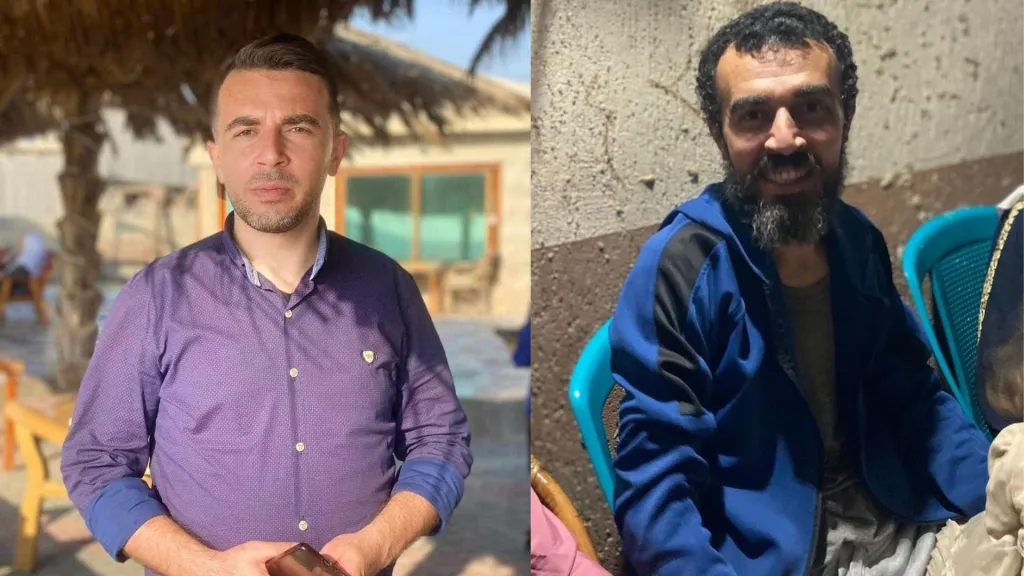
Journalist Abdelhameed Hamdona before and after 23 months of Israeli detention. (Photo: Courtesy of Abdelhameed Hamdoona)
CPJ could not independently verify each allegation, but the reports align with findings by human rights organizations documenting similar treatment of Palestinians in Israeli detention facilities, which Israeli human rights group B’Tselem has described as a “network of torture camps.”
While conditions varied at different facilities, the methods those interviewed recounted — physical assaults, forced stress positions, sensory deprivation, sexual violence, and medical neglect — were strikingly consistent. Ten journalists requested anonymity, alleging explicit threats of re-arrest or death from Israeli interrogators and prison service officials if they spoke publicly. These threats appear in 31 of the individual testimonies, and have driven many journalists away from their work.
“These are not isolated incidents. Across dozens of cases, CPJ documented a recurring set of abuse – from beating to starvation, sexual violence, and medical neglect – directed at journalists because of their work. They expose a deliberate strategy to intimidate and silence journalists, and destroy their ability to bear witness. The continued silence from the international community only enables this.”
— CPJ Regional Director Sara Qudah
The vast majority — 48 of the journalists — were never charged with any crime and were held under Israel’s administrative detention system, which allows for an individual to be held without charge, typically for six months that can be renewed indefinitely, on the grounds of preventing them from committing a future offense. The remaining 10 were charged with incitement, anti-state activity, or promoting terrorism.
The UN Convention Against Torture, of which Israel is a ratified signatory, defines torture as the intentional infliction of severe physical or mental pain or suffering, for purposes of obtaining information or a confession, punishment, intimidation, coercion, or discrimination, when carried out by, at the instigation of, or with the consent or acquiescence of a public official or person acting in an official capacity.
In November 2025, Peter Vedel Kessing, an expert on the United Nation’s Committee against Torture and Country Rapporteur, said, “the fact that Israel had ratified the Convention against Torture demonstrated the State’s willingness to eradicate and prevent torture and inhumane treatment. However, the Committee was deeply appalled by the large number of alternative reports received from a variety of sources of what appeared to be systematic and widespread torture and inhuman treatment of Palestinians, including children and other vulnerable groups”.
The journalists’ accounts describe a system built to silence them, and to ensure that stories from Gaza and the West Bank never make it out.
On the day Israeli forces detained Shadi Abu Sido, a photojournalist from Gaza, a soldier leaned close to him inside Al-Shifa Medical Complex and said, in English: “Game over.”
What followed, he said, was a ritual detainees call “al-Tashreefeh”, or “the grand welcome”, the coordinated beating of detainees upon arrival to Israeli prisons. Upon transfer to Sde Teiman detention camp, he said, he was shackled, blindfolded, and forced through a corridor of soldiers who beat him with batons and kicks. He later learned he had a broken rib.
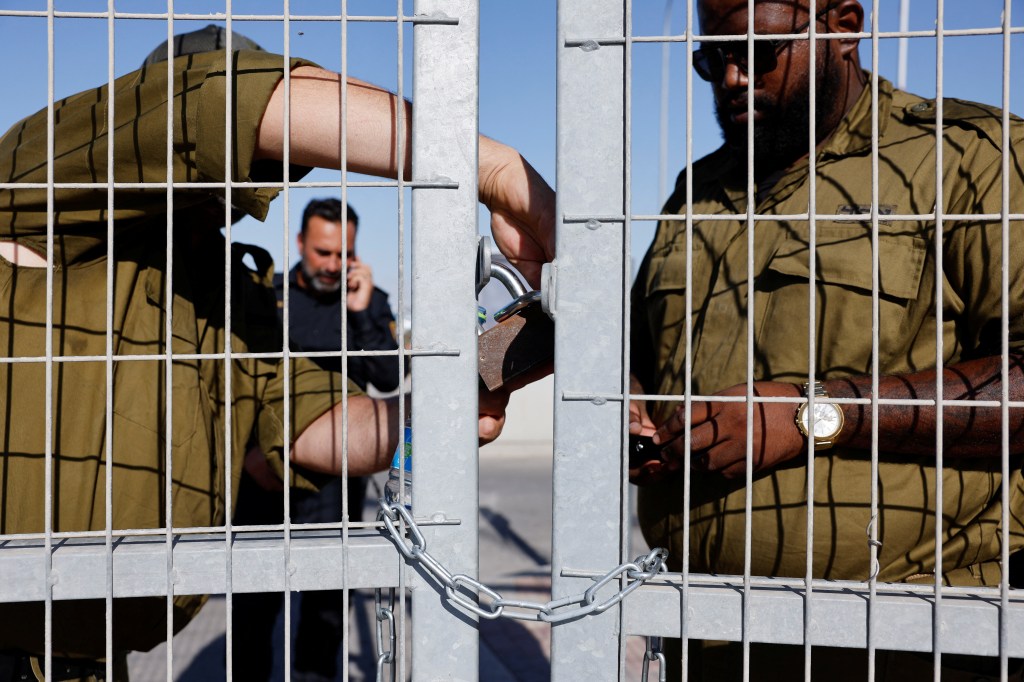
Soldiers lock a gate from the inside at Sde Teiman detention facility, after Israeli military police arrived at the site as part of an investigation into the suspected abuse of a Palestinian detainee. (Photo: Reuters/Amir Cohen)
Similar accounts of abuse recur across most of the testimonies. Of the 59 journalists interviewed, 56 said they were repeatedly beaten inside prisons by authorities, as well as during arrest and transfer to the facilities.
Mustafa Khawaja, a journalist from the West Bank, said a beating on March 14, 2024, in Shatta prison left him with fractured ribs, meniscus tears, and spinal injuries later diagnosed as herniated discs. In Ktzi’ot prison, another detained journalist, Mohammed Badr, said he was struck so hard his tongue was cut. For two weeks, he could barely speak or eat.
At Ofer prison, radio journalist Mohammad al-Atrash described a coordinated assault in November 2023 that he and other detainees called “a Shin Bet party” or a “Ben-Gvir party” — a mass punishment involving dozens of prisoners.
Al-Atrash stated that trained dogs were ordered to attack the detainees, and metal instruments were used to create long-lasting bleeding and scars. Gazan journalists Islam Ahmed and Osama al-Sayed recounted the intermittent use of electroshocking and pepper spray between beatings.
According to several testimonies, the punishment took place shortly after a visit by Itamar Ben-Gvir, Israel’s national security minister. On multiple public platforms, the minister has stated that he was proud of the worsening conditions of Palestinian prisoners held in Israeli facilities. CPJ emailed Ben-Gvir and the Ministry of National Security for comment but received no response.
Others described injuries that lingered. Journalist Mohammed Nafez Qaoud said repeated beatings during intake left deep wounds on his feet. Without treatment, he said, they became infected with “worms feeding on them.”
Beyond physical assault, 36 journalists, roughly two-thirds, described being placed in forced stress positions.
(Palestinian Journalist Shadi Abu Sido Describes Horrific Conditions in Israeli Prison)
(https://www.youtube.com/watch?v=oY2zWRjSZ2k)
Eleven cited the use of a method known as strappado, or what the Palestinian journalists termed “ghost hanging,” in which a person is hung, suspended by their arms, bound behind the back, and then pulled upward. Others said they were made to kneel or lay face forward for hours, as well as restrained under rain, direct sun, and sewage water.
One journalist, Sami al-Sai, said soldiers targeted the site of a recent kidney surgery despite his informing them of the operation. “We returned from hell,” Imad Ifranji told CPJ, using the term other detainees used for a section at Sde Teiman.
The United Nations Committee Against Torture (CAT), which monitors compliance with the Convention Against Torture and Other Cruel, Inhuman or Degrading Treatment or Punishment (UNCAT), has found that the use of prolonged loud music or noise may constitute torture under Article 1 of the Convention when it causes severe physical or mental suffering, particularly when combined with other coercive practices.
At least 14 journalists told CPJ they were subjected to prolonged exposure to high-volume sound, including continuous amplified music, resulting in sleep deprivation and sensory disorientation in Israeli detention facilities, particularly at Sde Teiman, a practice also documented by other human rights groups. Additional testimonies described round-the-clock dog barking that they said exacerbated their psychological distress.
At least seven, including Abdel Aal, reported that they were held for days in what they called “disco rooms,” where speakers blasted music at such intensity that sleep became impossible.
Palestinian Journalists Report Torture at Israeli Prisons
(https://x.com/DropSiteNews/status/2024477723352023157)
Freelance journalist Hatem Hamdan, who was rearrested on February 5, 2026, reported being confined for approximately nine hours in a prison transport vehicle while exposed to continuous loud music in Hebrew.
Lama Khater stated that during interrogation, she was blindfolded and forced to listen to documentaries on the attacks by Hamas and other Palestinian militant groups on southern Israel on October 7, 2023, prior to questioning. Osama al-Sayed, Yousef Sharaf, and Imad Ifranji reported the use of high-intensity sound bombs during detention after being arrested at Al-Shifa’ Medical Complex.
Medical neglect emerged as one of the most pervasive forms of reported abuse, often compounding injuries reportedly suffered during beatings or interrogations. CPJ documented 27 accounts of medical neglect and, in several cases, the complicity of health workers in violence against detainees.
Journalist Yousef Sharaf said wounds from repeated beatings became infected in the poor sanitary conditions of the prisons, forming abscesses across his body. He said that after going without medical care from prison authorities, another detainee, Dr. Nahed Abu Taima, an imprisoned surgeon from Nasser Medical Complex, performed improvised procedures using what detainees believed was cleaning bleach.
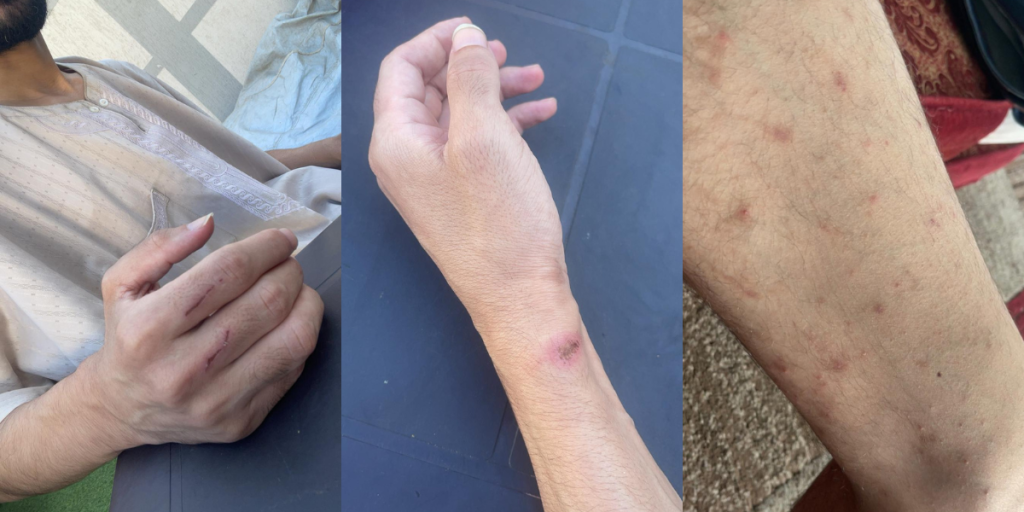
Images show some of the injuries journalist Shadi Abu Sido reported sustaining while in prison. (Photo: Courtesy of Shadi Abu Sido’s family)
Journalist Thaer Fakhoury told CPJ he sustained a severe eye injury during beatings in Etzion and Ofer detention facilities, resulting in temporary loss of vision for approximately 20 days. He stated that medical treatment was denied. Mohammed Imad Sultan, prior to being killed in an Israeli airstrike in western Gaza upon his release, similarly reported eye injuries and denial of medical care.
CPJ documented reports of widespread scabies, unexplained rashes and boils, wounds stitched without anaesthesia, untreated bone fractures and eye injuries, asthma attacks, and the deliberate neglect of serious pre-existing and newly sustained health conditions. Journalists also described unsanitary living conditions, chronic food shortages, and the complete lack of sanitary products for women.
Several said they avoided medical staff altogether, saying doctors themselves inflicted or condoned abuse. Abdul Mohsen Shalaldeh told CPJ and the Tadamon Centre that he was burned by lit cigarettes extinguished on his bare body. When he reported the abuse to an attending physician in detention, the physician responded, “It’s okay, no problem.” Another journalist who was detained recalled a doctor responding to a serious injury by saying, “Why did you call me if he isn’t dead yet?”
International humanitarian law explicitly prohibits the use of starvation as a method of punishment or coercion in detention settings. CPJ found that food deprivation was repeatedly described not only as physical suffering, but as a tool used to break detainees psychologically.
Fifty-five of the 59 journalists interviewed reported extreme hunger or malnutrition. CPJ calculated an average weight loss of 23.5 kilograms (54 pounds) among the group by comparing journalists’ reported weight before and after detention.
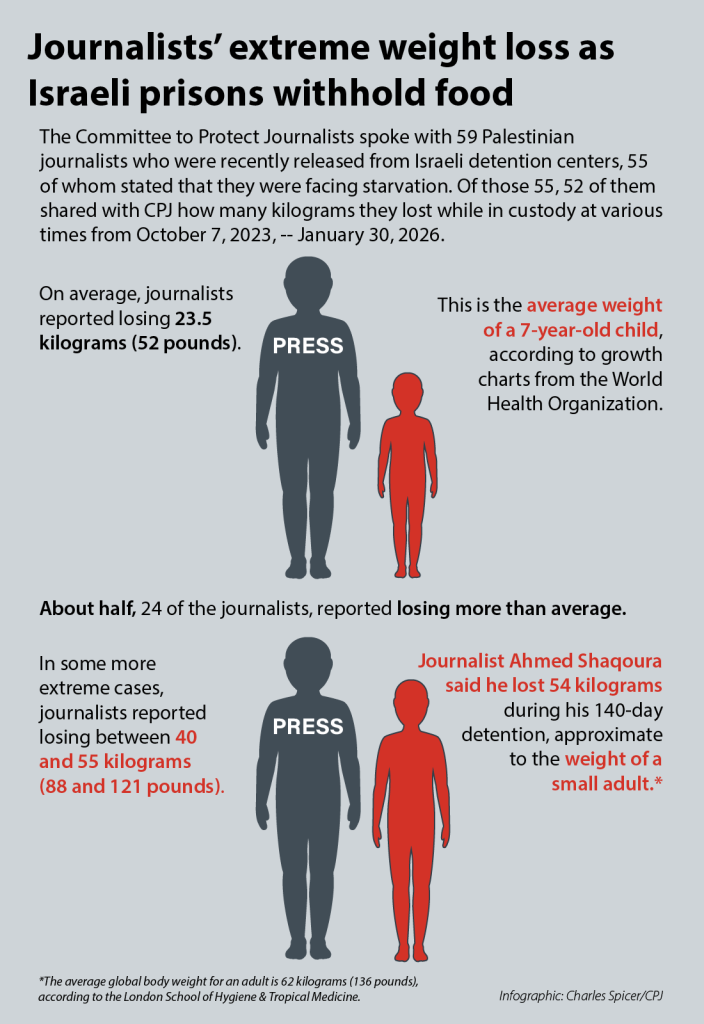
Photographs provided to CPJ show dramatic transformations, with journalists displaying gaunt faces, protruding ribs, and hollowed cheeks.
Ahmed Shaqoura said he lost 54 kilograms (119 pounds) during 14 months in Israeli custody in Ktzi’ot and Al-Jalama prisons. Others described surviving on moldy bread and rotten food, and generally inadequate quantities of food.
Journalist Ashwaq Ayad said she lost more than 15 kilograms (33 pounds) and began vomiting blood after being denied appropriate food and treatment for a pre-existing medical condition.
During winter, the lack of clothing forced trade-offs. One journalist, Abdelhameed Hamdona, said he swapped his food for a shirt. Israel’s national security minister Ben-Gvir said in July 2025 “I am here to ensure that the ‘terrorists’ receive the minimum of the minimum [of food].” Although Israel’s top court ruled in September that deliberate starvation is illegal, journalists released in recent months say they saw no improvement.
Sexual violence, documented by other rights groups in Israeli prisons, appears repeatedly in the testimonies, with journalists describing assaults intended to humiliate, terrorize, and permanently scar them.
In December 2025, German journalist Anne Liedtke, detained aboard a Gaza-bound flotilla, alleged Israeli soldiers raped her while in custody. Italian journalist Vincenzo Fullone and Australian activist Surya McEwen made similar accusations.
Two of the 59 Palestinian journalists also told CPJ they were raped in detention.
Journalist Sami al-Sai said he was taken to a small cell in Megiddo prison, and soldiers removed his trousers and underwear, and penetrated him with batons and other objects.
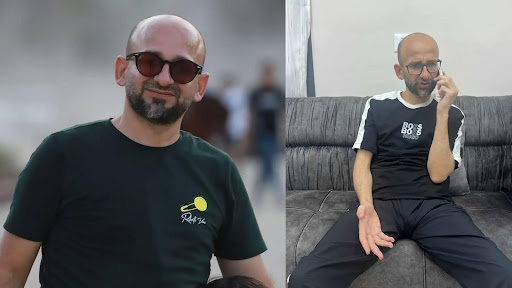
Sami al-Sai before and after his arrest by Israeli authorities. (Photo: Courtesy of Sami al-Sai)
Al-Sai recalls that he has not spoken about this rape during detention, “I did not speak to anyone inside the prison about what happened, except for two senior detainees who have been imprisoned for 25 years.” Al-Sai said he fell into a severe psychological state and was only able to emerge from it after hearing testimonies from other detainees. He said “I remained silent for nearly two months, but I ultimately decided to speak out about what happened to me.”
Another journalist, Osama al-Sayed, said he and other detainees were stripped naked and attacked by trained dogs in Sde Teiman. He described the incident as rape, adding that soldiers laughed while filming the assault.
In total, CPJ documented 17 journalist testimonies involving sexual violence and 19 more describing humiliating strip searches. The alleged acts included assaults on the journalists’ genitals, attempted forced penetration with objects, forced nudity and recording, threats of rape, and other methods of sexualized coercion.
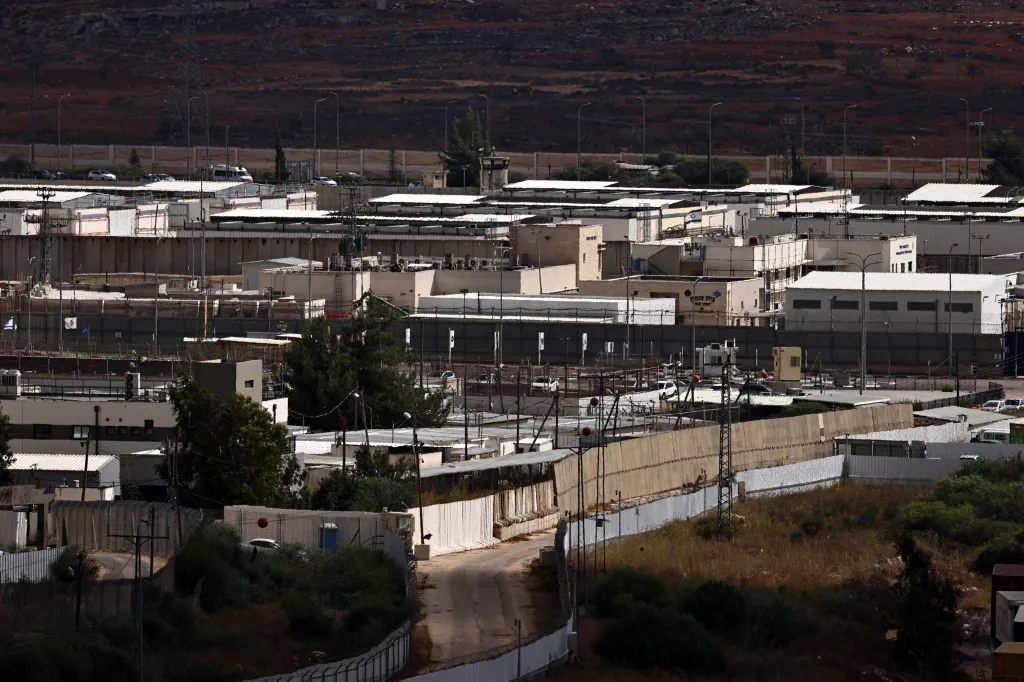
Thirty Palestinian journalists have been detained at Israel’s Ofer military prison complex, located between Ramallah and Beitunia in the occupied West Bank. (Photo: AFP/ Zain Jaafar)
Multiple journalists told CPJ they were explicitly targeted because of their work.
Mohammed Badr said interrogators questioned him for hours about his journalism and gave him a choice of becoming an informant or remaining longer in prison.
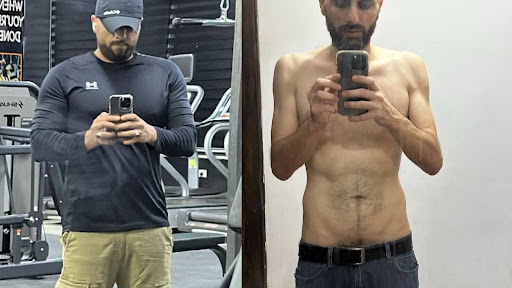 Journalist Mohammad Badr said he was struck so hard his tongue was cut, and he could barely speak or eat for two weeks. He told CPJ he lost 40 kilograms over 10 months of incarceration. (Photo: Courtesy of Mohammad Badr)
Amin Baraka said that he was repeatedly interrogated for his work with Qatar-affiliated Al Jazeera and threatened with violence against his family.
“An Israeli soldier told me, word for word in Arabic, that Al Jazeera correspondent Wael Al-Dahdouh defied us and stayed in the Gaza Strip, so we killed his family, and we will kill yours too,” he said.
Mohammed al-Atrash said before he was released from prison he was warned to stop working in journalism. “They told me if you write as much as “good morning” on your socials, we will find out,” he said.
Osama al-Sayed said that during his detention, soldiers referred to him as “Jazeera.” He cited heightened abuse when he declared that he is a journalist. Al-Sayed explained that during his arrest he told the soldiers, “I am a journalist and this is when I was beaten up gravely.” Shadi Abu Sido, who was arrested while filming, said the soldier that detained him said, “you will learn the meaning of journalism in Tel Aviv there.”
The Israeli military did not respond to CPJ’s repeated requests for comment on specific allegations by journalists, instead requesting ID numbers and geographic coordinates that CPJ does not collect or provide. When asked about allegations of physical, sexual abuse and starvation, and the investigation and accountability process, an army spokesperson said “individuals detained are treated in accordance with international law,” adding that the armed forces “have never, and will never, deliberately target journalists,” and that any violations of protocol “will be looked into.”
CPJ also emailed the Israel Prison Service (IPS) regarding the allegations. In response, the IPS said “all prisoners are detained according to the law” and that “all basic rights are fully upheld by professionally trained prison guards.” The service said it was unaware of the claims described, and that to its knowledge “no such events have occurred,” but noted that the “prisoners and detainees have the right to file a complaint that will be fully examined and addressed by official authorities.”
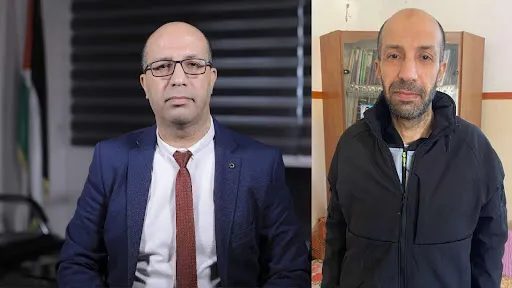 Journalist Rami Abu Zubaida told CPJ he lost 35 kilograms over his year held in Israeli detention facilities. (Photo: Courtesy of Rami Abu Zubaida)
Human rights groups, however, report that these complaint mechanisms are largely ineffective, and in some cases, expose detainees to further harm. Journalist Farah Abu Ayash, who was not interviewed by CPJ as she remains imprisoned, stated in a testimony made public by her lawyer that she was slapped by a soldier upon her detention and forced to kiss the Israeli flag. Abu Ayash said she filed a complaint against the soldier involved, but prison conditions deteriorated and she was held in solitary confinement for over 50 days, and subjected to routine beatings and starvation. CPJ emailed the Israeli Prison Services to follow up on the complaint Abu Ayash said she submitted but received no reply.
Journalists also widely reported not being allowed access to their lawyers, an experience broadly reflected by what other right groups have reported. At least 21 said they were denied adequate legal representation, with 17 stating they were not allowed to speak to a lawyer at all. A further four said they were permitted to see a lawyer only once, for a few minutes and under non-private conditions.
In an April 2024 communiqué between CPJ and UN Human Rights Office, it was noted that some detained journalists were denied access to lawyers and family, leaving them isolated throughout administrative detention, and undermining their legal representation.
Additionally, while legal representation is formally provided through the Palestinian Authority-administered Commission of Detainees Affairs (CDA), the system appears to be overstretched. UN Human Rights reported that only four lawyers were assigned to administrative detention cases, each carrying a caseload of approximately 900 detainees.
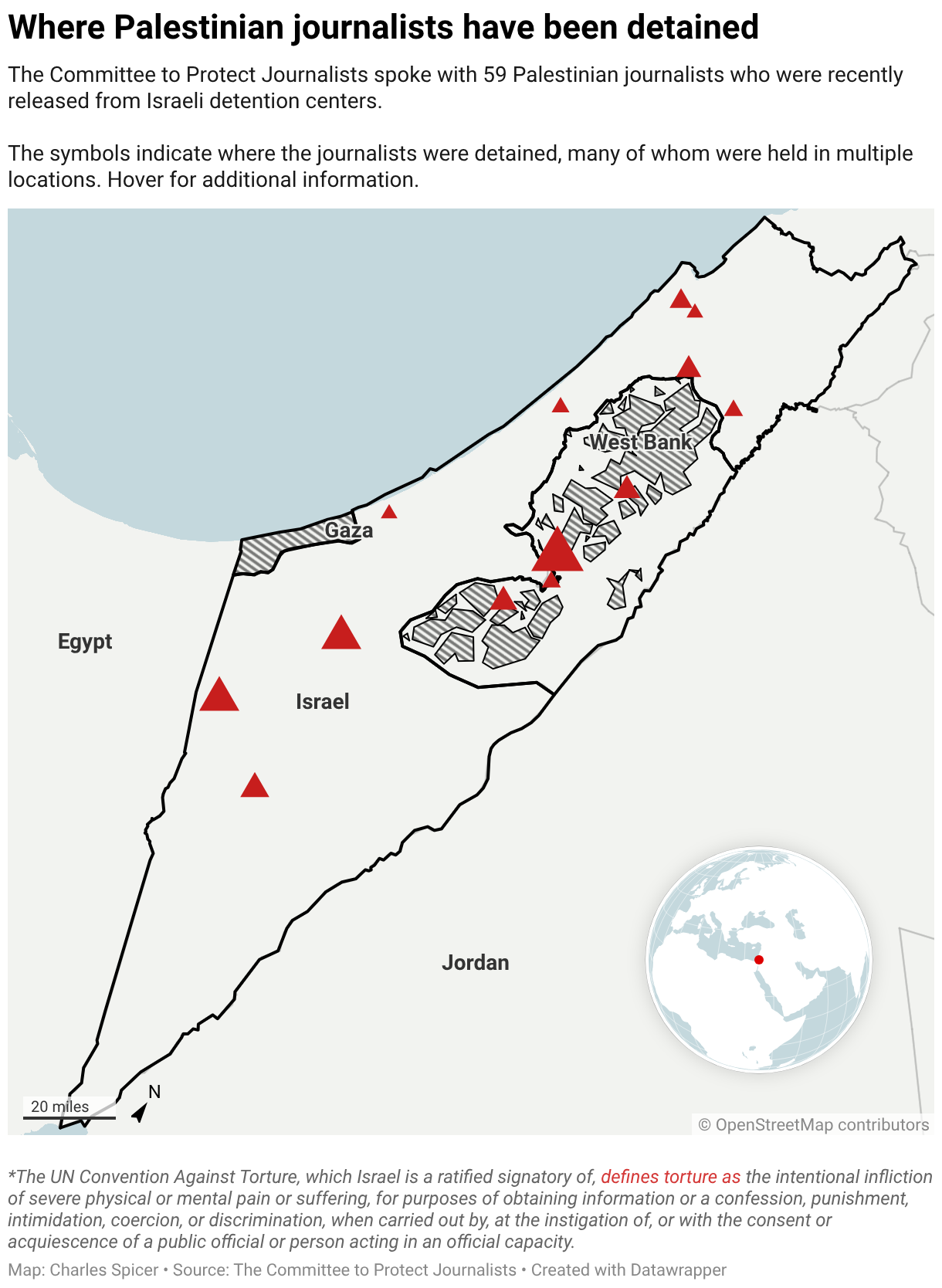
A system of impunity – not an aberration
Reported allegations of torture, abuse and violence in Israeli prisons are not new and are not limited to journalists. Israeli and international rights groups have, for years, documented patterns of abuse against civilian Palestinian detainees – including journalists. A recent report by Physicians for Human Rights–Israel documented at least 90 Palestinian deaths in Israeli custody, according to the organization, meet the threshold of torture under Article 1 of the Convention Against Torture, as well as to medical neglect.
In early 2025, leaked surveillance footage from Sde Teiman detention camp appeared to show soldiers sexually assaulting detainees, triggering a national scandal. The footage was aired by Israeli journalist Guy Peleg, who has since reported facing threats and harassment.
The testimonies collected by CPJ suggest that what Palestinian journalists experienced over the past two years is not the result of rogue individuals but a systematic pattern of detention practices that rely on violence, humiliation, and deprivation to intimidate journalists and suppress reporting from Gaza and the West Bank.
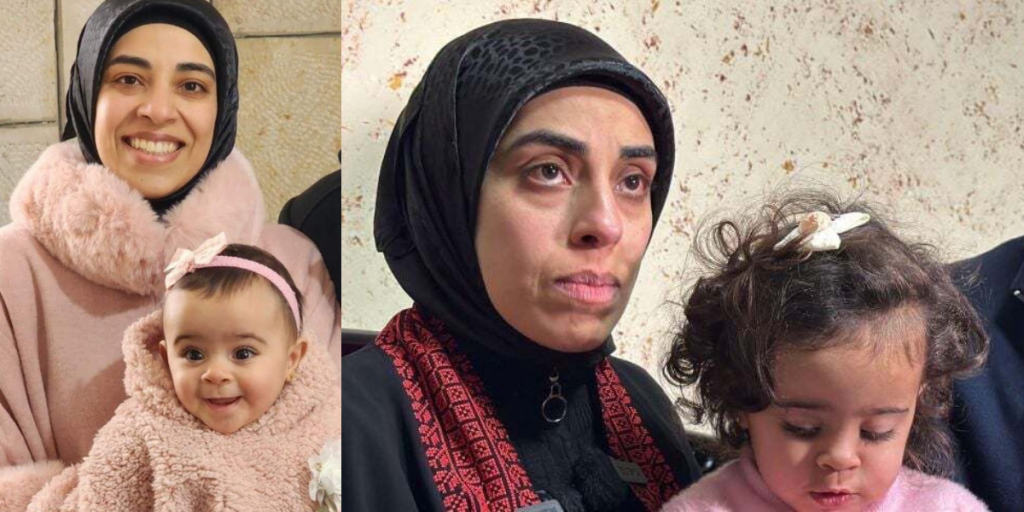 Rula Hassanein before and after ten months of detention. (Photo: Courtesy of Rula Hassanein)
“These are not isolated incidents,” said CPJ Regional Director Sara Qudah. “Across dozens of cases, CPJ documented a recurring set of abuse – from beating to starvation, sexual violence, and medical neglect – directed at journalists because of their work. They expose a deliberate strategy to intimidate and silence journalists, and destroy their ability to bear witness. The continued silence from the international community only enables this.”
The scale, consistency, and severity of those documented abuses raise serious questions under international law, including potential violations of the UN Convention Against Torture, and Article 79 of the Geneva Conventions’ protections for journalists.
Breaking this cycle requires more than the release of the 30 Palestinian journalists still held in Israeli prisons, who were not included in this report. Of those still imprisoned, 25 have no disclosed charges.
While the Israel–Gaza war is defined by profound political, military, and humanitarian consequences, this context does not diminish the need to address the particular risks faced by Palestinian journalists. Israel must allow independent international monitors, including UN special rapporteurs, access to detention facilities and conduct transparent, impartial investigations into all allegations. The international community must break its silence and press for accountability and ensure violations of international law do not go unpunished, and that the cost of reporting does not remain unbearable.
This report is based on in-depth interviews conducted by CPJ’s research team with 59 Palestinian journalists released from Israeli detention between October 2023 to January 2026. Interviews were conducted via phone and online messaging services and transcribed verbatim. Participants were asked standardized questions covering the circumstances of their arrest, detention conditions, legal status, alleged abuse, and health impact. Interviewees were offered anonymity. And, where available, they provided supporting documentation such as photographs, medical reports, and legal documents. Reported claims of abuse and torture were analyzed for patterns across multiple testimonies and cross-checked against publicly available reporting and prior documentation by human rights organizations.
CPJ corroborated the information collected through multiple sources. Where possible, testimonies were cross-checked against documents provided by the interviewees and independently verified public sources, including media reporting, prior human rights documentation, and limited medical records. The report also reflects engagement with Israeli authorities through requests for Right of Response (ROR), and documents both responses received and instances where no response was provided. This methodology ensures transparency in both the systematic collection of information and the verification of allegations while acknowledging limitations due to restricted access, security concerns, and gaps in documentary evidence.
CPJ uses the term “torture” in this report to reflect the language used by detainees and human rights organizations. CPJ does not make legal determinations, but reports documented accounts, patterns, and expert assessments.
Credits
Rama Sabanekh has been CPJ’s researcher for the Levant since November 2025. A third-generation Palestinian refugee based in Amman, Jordan, she holds an MA in War Studies from King’s College London and a BA in Politics and Economics from SOAS, University of London. With an academic and professional focus on the political geography and history of the region, she has worked with a range of independent news and media outlets as a freelance contributor, senior editor, researcher, and producer. Rama has worked in English and Arabic across multiple media platforms and has collaborated closely with grassroots groups advocating for feminism, queer rights, and labor rights.
Mohammed Othman joined CPJ as a Middle East and North Africa researcher, focusing on Gaza and the West Bank, in August 2024. He has worked in the media since 2009, specializing in investigative journalism, in addition to reporting for the regional press freedom group SKeyes.
Kholod Massalha is a CPJ consultant on Israel and the Occupied Palestinian Territory and a researcher with years of experience in press freedom and freedom of expression issues.
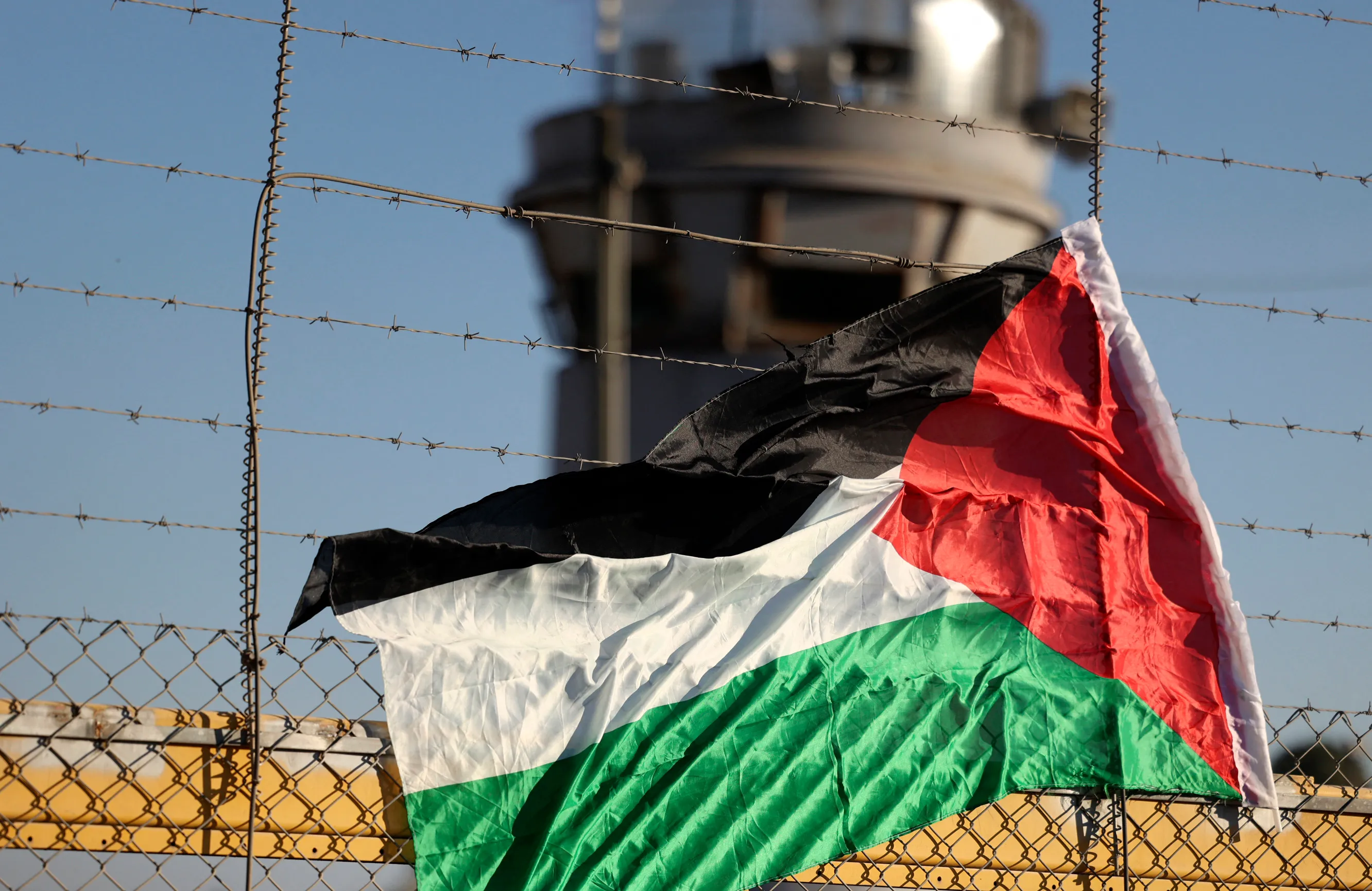
Featured image: A Palestinian flag is pictured on the fence of Israel’s Ofer prison near the city of Ramallah in the occupied West Bank, on July 12, 2021. (Photo: AFP/Abbas Momani)
oooooo
Ritter’s Rant 076: Pay it Forward
ooo
Ritter’s Rant 076: Pay it Forward
When the going gets tough, look for random acts of kindness to help pull us all through.
Feb 25, 2026
Transkripzioa:
Hello, and welcome to this edition of Ritter’s Rant. Today, I’m going to talk about paying it forward. In 2000, there was a movie made by that name, Pay It Forward, Kevin Spacey, and a young kid, you know, it was a movie about, you know, helping people out. doing things.
And then the idea is once you get helped out, you help other people out. And, uh, there’s a cascade about that. And, uh, the movie was popular, but, you know, people go to movies and say, well, that’s just Hollywood. It’s not real. It doesn’t really happen. You know, it’s just, you know, blah, blah, blah.
Well, you know, a couple of years ago, my wife and I, uh, traveled to, um, California to visit my parents and the way that airplane tickets are, flying directly into Palm Springs would cost us around $100 more than if we took one of these cheap flights to Las Vegas and then rented a car and drove.
We would actually save, you know, 800 bucks. And since I’m not rich, 800 bucks is a good thing. So we were driving from Las Vegas to Palm Springs and we go through a stretch of desert north of the Marine base of 29 Palms where I used to be stationed near Amboy, Amboy Crater.
You guys can look at it on a map, but it’s a very desolate area. No people, no nothing. And we’re trying to get there in time for Thanksgiving, Thanksgiving meal. And so we’re sort of time is time is essential. And we’re driving and driving and we pass this car and I look and there’s this car
heading the other way and it’s off the side of the road, but it has bottomed out. It got into the soft sand. Apparently they pulled over for whatever reason and they got in the soft sand and it was bottomed out. And there was a lady there, a young lady. She had a dog.
and in her arms and a guy on the hands knees trying to dig that car out. And, you know, my wife and I drove on and I went, we got we got we can’t just we got to help. And she agreed. And so we turned around and we went there and, you know,
I spent some time with the guy trying to dig it out. And I said, we’re never going to get this thing out. And, you know, the whole time we were there, no cars were going by. And if a car did go by, it didn’t stop. So these guys were literally up the creek without a paddle.
So I said, look, why don’t you guys lock up your car, you, your dog, get in ours and we’re going to drive you to 29 Palms about an hour away and we’ll take you to a towing car company and we’ll arrange to have a truck come out and pull you out of the sand.
And, you know, this guy was a young Marine. He had gotten what’s called a 96. That’s a four day pass. They’re tough to come by. And he and his young wife We’re going to go visit her family in Henderson, Nevada, a town just south of Las Vegas. And when you’re on a 96, time is everything.
That’s 96 hours. And every hour spent trying to dig your car out or waiting is one hour you’re not home with the family. And he was a young Marine. He doesn’t have any money. And they were just devastated because they were basically looking at their entire vacation plans going down
drain uh we got there and we asked the um the towing company you know how much was this going to be and uh it was a considerable amount of money um i mean not millions but you know it was money and uh there’s money clearly this marine didn’t
have so um i left my credit card and i said uh whatever it is add a uh at a 25 tip and uh i’m just going to trust you to build the proper amount And the guy said, I
promise you I will.
He said, I’m a former Marine myself, and what you’re doing for this Marine is very good. So we’re going to give him a good deal and all that. And we left that Marine family there. And sure enough, I got an email about an hour and a half later from the tow company.
They told me how much money they had charged the car. And they said, we got them out. The car is fully functional. And we got them on their way. They’re headed home. And it made my wife and I feel pretty good. It was like, wow.
We did something cool, help somebody out, you know, and you don’t do it for reward. You don’t do it for recognition. You don’t do it for anything. You just do it because it’s the right thing to do to help people out. And we weren’t thinking about paying it forward.
You know, we weren’t expecting anything good to happen to us. It was just the right thing to do at the time. Well, this morning I took our dogs out to the. dog park that we go to, there’s been some snow and it was tough getting in there and driving in. I’m fishtailing all over the place.
And I’m like, we really should be doing this. But the dogs were in the car and they were excited about going to the park. So we did it. We took them to the park. They ran around, did their thing. And we’re coming home and the dogs are jumping all over my lap and everything.
And I got distracted and I went off the road and I buried my car. in the snow and ice, literally up to the up to the engine wheels covered. I couldn’t get out. I’m in, you know, just got to get to work. We got the dogs in the car and we’re stuck in the middle of nowhere.
And because of the weather, because of the road conditions, wasn’t anybody coming. We were on our own and we’re in an area with sort of bad cell phone reception. So it was looking grim. But being the former Marine that I am, I I looked in the back and I had one of those, uh,
brushes used to wipe your windows off and everything. And I, I got out and I just started trying to dig this car out and I, I had made decent progress, but, um, you know, I wasn’t dressed for outdoor adventures. I had a pair of, uh, shoes on slip on shoes.
Um, and the, the snow by the driver’s side was knee deep and I had, gone in there and you know i have a neuropathy i can’t feel my feet that’s a whole nother issue but one of my shoes came off and i didn’t realize it so i’m down there
digging around for about 10 minutes my foot is turned into a solid block of ice but i couldn’t see but i got this pink foot sticking out there in the middle of nowhere trying to dig the car out and um suddenly i hear a voice shout from behind me dude
put your shoes on and get in the car. You know, we got this. And I looked over and there, there were two guys there. Um, they were from a private company. Um, there had been major, uh, anybody who follows my writing remembers, I wrote about the, uh, killed their eggs and the, uh, you know,
the gas pipeline that was put in and all this stuff. And, um, you know, there was a lot of, um, contractors that were involved in that project. I guess these guys were sent out because of the weather just to make sure everything was okay. Um, It was fortunate they came by, but they saw me.
I guess it was my pink foot that gave me away because the rest of the car was buried in the snow. And they said, you got to get in the car. And we worked it out,
but they dug me out. A lot of work.
They attached a tow line and we were able to get my car out of the ditch and get my wife and I safely back on the road. You know, and we’d still be there right now if it weren’t for these two guys. They had no obligation, no duty, no responsibility to stop for us.
They could have just said, hey, we’ll go get help. But they made a decision that they were going to do the heavy work. You know, they refused to accept money. They refused to accept anything except a handshake of thanks. They were truly, you know, angels sent down to help us in a time of need.
And basically what we did to that Marine family, It got paid for. People came down with an act of kindness. And I wanted to talk about it today because we live in sort of very stressful times. A lot of pressure on us, a lot of pressure at home.
The economy isn’t as great as everybody claims it’s going to be. A lot of people are working, you know, paycheck to paycheck. There’s stresses. There’s everything. We have domestic problems here in America. We have problems overseas, rumors of war and actual war. And I think tensions are high and we lose our tempers easily.
We tend to forget that, you know, the people out there feeling the same way, going through the same pressures, their fellow human beings. And, you know, we Rather than creating additional stress for one another, we should be doing our best to de-stress. And we de-stress by helping people in need. It can be an act of kindness.
I mean, if you’re at the store and you see somebody struggling because maybe they have a little bit too much in front of them and not enough money in their wallet to pay for it, step forward and pay the bill. The other day I was at the train station and…
There was a homeless person there who basically I was paying for snacks I was bringing on the train. And he said, would you be able to help me out? And I had watched several people go through the line before me and nobody helped them out. And I said, sure, bring it up.
And he rang it up and he was able to get a drink and some food. It didn’t cost me a lot of money. It was just an act of kindness to pay it forward. Who knows? Someday he might be able to help somebody else out. And that’s the whole thing.
If we just start helping people, we just start being kind to people. And We pay it forward. We have people kind to us. We help people. There’s no duty. There’s no obligation. It’s just basic human responsibility. If we just start behaving as human beings, treating each other with respect, loving kindness,
it’s amazing how good things will start to happen. I shouldn’t be here right now. I should be about seven miles away. a buried car running out of gas car overheating dogs uh in distress wife angry at me um that’s where i should be but i’m not i’m here able to talk to you because the
kindness of two strangers who took it upon themselves to come to the aid of somebody who clearly was in need of help and i thank these two gentlemen and um i encourage everybody to just Go forth today, and if you see somebody who needs help, help them out.
And if not, just be kind, a smile, a handshake, a nod of the head, anything. We pay kindness forward, and karma will ensure that kindness comes back. Anyways, that’s my rant. The next time a thought crosses my mind, I’ll be sure to let you know.
oooooo
Chocolate, Puppies, and Ice
ooo
Chocolate, Puppies, and Ice
Sometimes life deals you a bad hand. Then Karma kicks in.
Feb 25, 2026

Maverick (left) and Iceman (right) frolicking in the snow
This story begins last Friday night. I was at a reception hosted by the Russian embassy on the occasion of Defender of the Fatherland Day. I was approached by a lady from Belarus, who had seen an interview I had done last November, on the occasion of my first ever visit to the Belarussian capital of Minsk. To commemorate that occasion, she handed me a bar of Belarussian dark chocolate—100 grams of unsweetened chocolate containing 85% cocoa (these facts do matter.)
When I got back to my hotel after the reception, I packed the bar of chocolate away in my backpack. Upon returning home the next day, I emptied my back pack of the essentials (computer, power cords, etc.) and zipped the backpack up before placing it on a stack of books near my desk.
There it lay, untouched.
Until last night.
I came home after taking my wife to dinner. We opened the door, and stared in horror at what we saw—Iceman, my 2-year old Pomeranian, had the remnants of a bar of dark chocolate—the same bar that was given to me at the reception—on the ground in front of him, and he was busy consuming as much of it as he could (he had apparently smelled it in my backpack, and used his teeth to unzip the bag, gaining access to the bar. This is what my forensic examination of the crime scene revealed after the fact.)
I quickly scooped up what was left of the bar, and ran my fingers through Iceman’s mouth, removing the chocolate that was there. As I did this my wife saw our other Pomeranian, a five-year old maniac named Maverick (yes, there is a Top Gun theme here) also consuming chocolate from the same bar. She quickly recovered this chocolate, and turned it over to me.
I laid the chocolate pieces on the kitchen counter, and quickly determined that of the 15 “blocks” of chocolate that had comprised the bar (five rows of three ‘blocks” each, four were missing. 100 grams, divided by 15 “blocks”, is about 6.66 grams per block. Or a total of 26.6 grams of dark chocolate consumed.
26.6 grams equals .93 ounces.
Chocolate contains substances known as methylxanthines (specifically caffeine and theobromine), which dogs are far more sensitive to than people. Different types of chocolate contain varying amounts of methylxanthines. A 100 gram bar of dark chocolate containing 85% cocoa has about 810 mg of theobromine and 81 mg of caffeine—a lethal combination of highly toxic (for dogs) substances.
A quick google search confirmed my worst suspicions: one ounce of dark chocolate for a dog weighing 15 pounds is trouble with a capital “T”.
We had no way of knowing how much either dog consumed.
We had to prepare for the worst.
I called an emergency vet, who put me in touch with an animal poison center.
They agreed with my calculations.
My wife and I were quickly on our way to the nearest CVS, where we bought a bottle of 3% hydrogen peroxide and a syringe. Once home, I administered one tablespoon of the hydrogen peroxide to each dog in order to induce vomiting.
Neither dog enjoyed the taste of the liquid.
Nor did either dog throw up.
I spend a long night alert for any signs of symptoms of chocolate poisoning: Vomiting, Diarrhea, Increased body temperature, Increased reflex responses, Muscle rigidity, Rapid breathing, Increased heart rate, Low blood pressure, Seizures, Cardiac failure, Weakness, and Coma.
Both dogs spent the night snoring, before waking me up at 3 in the morning to let them outside, before coming back inside and resuming their snoring.
I tossed and turned fitfully, constantly monitoring them for any symptoms of poisoning.
It had been snowing over the course of the past few days, adding a layer of several inches to snowfall which had accumulated to more than two feet in some places. The snow had fallen overnight, and the ground was covered with a fresh blanket of the frozen white powder. Normally, I would forgo taking the dogs to the dog park, simply because the road leading in would probably not be plowed.
But this morning, overcome by guilt over leaving a bar of chocolate where the dogs could access it, and wanting to observe the dogs while active to see if there were any signs of acute poisoning, my wife and I opted to take them to the park on the way to me dropping her off at work.
The roads were as bad as I had imagined, but we got to the park without incident, and the dogs proceeded to engage in a frisky, symptom-free romp before I gathered them back up for the onward journey.
On the way out of the park, the dogs do what dogs do—jump around, and generally get in the way of my driving. As I shooed Maverick and Iceman off my lap and into the back seat, I took my eye off the road for just a second, allowing the car to drift slightly to the left—just enough to slide off the side of the road into a snow-filled ditch.
We were stuck fast. The car had bottomed out, and the tires were fully encased in snow and ice. When I hit the gas, all I accomplished was to have the tires dig us deeper into the trench.
We were about seven miles from home, in a fairly remote area with tricky cell phone coverage. Given the condition of the roads, there was no telling if and when someone might arrive to see out predicament.
I had no choice but to try and dig us out.
I had one of those long plastic ice scraper-brush combinations that one uses to clean a snow-and-ice covered car up in the morning before driving (yes, I had used it this very morning to clean my car up.) I proceeded to use this device and my hands to chip away the ice and snow, and scoop it out from under the car.
I wasn’t dressed for outside activities, and the snow around the car was knee-deep in places.
I was working hard, but getting chilled to the bones in the process. I have fairly severe neuropathy in my feet and legs (I can’t feel a thing), and somewhere along the way my left show got sucked off my foot, leaving me barefoot as I was digging around the car. I was clueless.
Things weren’t looking very good.
Right about time I started feeling the first whisps of despair kick in, I heard a voice from behind me:
“Dude, get back in your car and put your shoes on! We’ve got this!”
I looked behind me. A large commercial utility truck had pulled up, belonging to one of the score or more contractors who had helped install a gas pipeline this past summer-fall alongside the dog park. I had previously cursed these workers under my breath, because I blamed them for the dislocation of a family of Killdeer and the destruction of the bird’s egg-filled nest.
They were back to check up on how their work was holding up under the stress of bad weather. I guess they saw my pink foot thrashing in the air as I dug the snow out from under my car, and drove over to investigate.
Two young blue-collar men, wearing boots and flannel and sporting baseball caps, stepped out. I got to my feet, and looked at them. I must of looked like a half-crazy old man, holding the car-scraper in one hand, shoeless, hair tussled up, breathing hard, eyes wide.
“Seriously. Get in your car. Put your shoes on. We will take it from here.”
I looked down at my feet. Sure enough, I was standing in the snow and ice, one shoe gone. I looked around, and saw it stuck in the deep footprint I had made on the side of the car. I retrieved the shoe, and climbed in the driver’s seat, watching as they pulled a snow shovel out of the bed of their truck and pulled a towing cable from their front bumper.
Maverick and Iceman were barking their non-symptomatic barks in the back seat.
My wife looked at me, a little concerned with what she saw.
“It’s Karma”, she said. “It’s repayment for what we did for that couple in California.”
A few years ago, my wife and I flew out to southern California to visit with my parents, who had retired in the Palm Springs area. Direct flights to Palm Springs were prohibitively expensive, but if you flew in to Las Vegas, you could spend the night in a hotel, rent a car, and after a five hour drive, be in Palms Springs with an extra $800-1,000 dollars in your bank account.
That was our plan.
About mid-way through the trip, an hour north of the 29 Palms Marine Base, near the Amboy Crater, we passed a car on the opposite side of the dual-lane road we were driving on. It had pulled off onto the shoulder, and had sunk up to its axles in the soft sand. There was a pregnant young lady, holding a dog in her arms, watch as a young man lay next to the car, trying to dig out of the sand using a stick he had recovered from the side of the road.
“We have to go back and help”, I told my wife. She agreed.
The young man turned out to be a junior enlisted Marine stationed in 29 Palms. He had received a 96-hour pass (basically a four-day vacation) from his command, and he and his expectant wife were headed to Henderson, Nevada to visit her parents for the holidays.
Except they weren’t going anywhere.
“We’re not digging you out of this”, I said. “We need professional help.”
My wife and I told them to lock the car up, and for them and their dog to jump in our rental vehicle so I could drive them to 29 Palms and the closest garage where we might find a tow truck.
About an hour later we arrived at a service station which advertised a towing service.
We walked in and I went over to the manager and explained the situation. “He needs to get his car out of the sand, and then he needs to have his tires looked at and replaced if necessary.”
I had overheard the wife whispering to her young Marine, “We don’t have any money.”
I handed my credit card to the manager. “Take down my card information. Charge the toy costs and any tires the need replacing to my card. Throw in a 25% tip for yourself. But under no circumstances does that Marine pay a dime out of pocket for any of this.”
We bade the Marine and his wife good luck, and got on with our trip. About an hour and a half later I got a call from the tow manager: they got the car out, replaced one tire, and the Marine and his wife were on their way. He told me the price, and said I had done a good thing.
We didn’t know those two young people.
But they needed help.
And we were in a position to help.
These two young blue-collar guys didn’t know me from Adam.
But when they saw my pink left foot waving about in the air, they knew I needed help.
And they helped.
It took some digging, but eventually we got the car out of the ditch and back onto the road.
I got out and shook their hands. I handed over a wad of cash. “Thanks,” I said. “We were in a bind.”
They both waved me away. “We can’t take that”, they said. “No way.”
And they wouldn’t, no mater how much I persisted.
We shook hands.
And we each went on our respective ways.
Karma exists.
I left the park with a renewed faith in the world.
We live in a time where domestic strife threatens to tear our country apart.
Where foreign wars and rumors of war loom on the horizon.
People are struggling one paycheck to the next.
Tensions are high,
But if we just take the time to help out those in need, to lend a helping hand, with no expectation of a reward other than the knowledge you did something good for a fellow human being, the world would be a much better place.
Play it forward.
Make the world a better place to live in.
As I finish writing this, I look over at where my two dogs are sleeping, snoring away, oblivious to the world.
Symptom free.
Chocolate, puppies, and ice.
What a combination!
oooooo
February 24, 202
Professor Sachs: President Trump: Give Back the Money and Stop Grabbing More
Jeffrey D. Sachs | February 23, 2026 |
The White House and Congress can and should provide relief to American families who bore the costs of these illegal tariffs. The administration has the responsibility to design such relief. You took the money illegally; now you should return it.
President Donald Trump, you took funds from the American people that were never yours to take. Give them back, and end the abuse of power.
Friday, the Supreme Court confirmed what many of us argued from the beginning: Your sweeping tariffs were an unlawful overreach of executive power. The Constitution gives Congress, not the president, the authority to set tariffs. Yet you invoked emergency powers you do not have, in response to a supposed national emergency that does not exist. This was a power grab, and the court said so.
President Trump, your tariff regime was illegal, unfair, and detrimental to the American people. You also grossly misrepresented the facts to the American people by claiming that foreign countries were paying. They were not. American families paid.
Over the past year, roughly $140 billion in tariff revenue was collected at US ports. Economists at the Federal Reserve Bank of New York, the Kiel Institute, and other independent research institutions reached the same conclusion, that the burden of the tariffs fell overwhelmingly on American importers, businesses, and consumers. Foreign exporters barely reduced their prices, so the tariffs were passed on to Americans and have shown up as higher prices for consumers and businesses.
During the past year, on average, American households paid roughly $1,000 or more. For families living paycheck to paycheck, that is not abstract. That is rent stretched to the breaking point. That is groceries rising in price while wages fail to keep up. The working-class Americans who believed your promises were the ones who bore the cost of this power grab.
Each claim you made in favor of the tariffs was unsound and proven to be so. You said that the tariffs would slash the trade deficit. This was wrong because the US trade deficits reflect the low US saving rate, and especially the large US budget deficits. In fact, the US goods deficit in 2025 was $1.241 trillion, worse than the 2024 deficit of $1.215 trillion. You said that you would restore manufacturing jobs. Yet employment in manufacturing in January 2026 was 12.590 million, compared with 12.673 million in January 2025, a decline of 83,000 jobs year over year.
At the same time, you championed and extended tax cuts that disproportionately benefited the wealthiest households and large corporations. Independent studies have repeatedly shown that the largest permanent gains from those tax cuts flowed to the top of the income ladder. Your administration’s approach has effectively given tax relief for the rich, covered in part by regressive tariffs hitting the working class and poor. And much of your tax cuts are paid for by red ink, debts pushed into the future, that will be borne by today’s young people in later years.
Working families have paid more at the checkout counter. Wealthy households have received large tax cuts. And young Americans have been burdened with more debts.
And now comes insult added to injury. Following the Supreme Court’s ruling, Treasury Secretary Scott Bessent made clear the administration’s position. Speaking at the Economic Club of Dallas, he said, “I got a feeling the American people won’t see it,” referring to the prospect of tariff refund checks. He instead dismissed refunds as “the ultimate corporate welfare,” arguing that any repayments would go to importers rather than consumers.
The White House and Congress can and should provide relief to American families who bore the costs of these illegal tariffs. The administration has the responsibility to design such relief. You took the money illegally; now you should return it.
Astoundingly, in response to the Supreme Court decision, you have just announced a new across-the-board 15% tariff under Section 122 of the Trade Act, this time supposedly justified on emergency balance-of-payments grounds. Section 122 might possibly give you the temporary authority, for up to 150 days, to impose such a tariff in response to serious balance-of-payments difficulties. Here too, your authority is doubtful because the US is not in a balance-of-payments crisis. Yet even should the courts find that you have the authority, you should not use it.
A 15% across-the-board tariff will simply continue the same regressive tax on the American people that you illegally implemented with the claim of emergency powers. It would once again mean higher prices on food, clothing, electronics, building materials, and countless everyday essentials. It would once again fall hardest on working families who spend the largest share of their income on such goods.
An unlawful regressive tax cannot be remedied by replacing it with a possibly lawful and temporary regressive tax. It’s quite possible that the 15% tariff will be struck down too.
The United States needs real tax reform. Our tax code has become a distorted mess, shaped over decades by presidents of both parties to favor capital over labor, wealth over work, and obscurity over fairness. The tax code needs progressivity. It needs to close loopholes that allow the wealthiest Americans and multinational corporations to avoid paying their fair share of taxes, especially in an era when eleven Silicon Valley centibillionaires have $2.6 trillion in personal wealth.
Working Americans are not props in a political narrative. They are parents choosing between medical care and rent. They are families who were told someone else would pay, only to discover the higher prices in their own shopping carts.
President Trump, you asked Americans to believe that you stood with working people. Instead, you imposed illegal taxes on them and gave large tax cuts to the richest Americans. Now your Treasury secretary says the government will keep the money you took, and you have promised to continue to take this money in a different way.
Return the $140 billion that was taken under unlawful authority. Do not impose a new 15% tax on American households. Fix the tax code honestly and transparently through Congress.
The Constitution demands accountability. Justice demands restitution of the funds and an end to your tariff grab. The American people deserve better.
https://www.commondreams.org/opinion/trump-give-back-tariff-money
oooooo
Geure herriari, Euskal Herriari dagokionez, hona hemen gure apustu bakarra:
We Basques do need a real Basque independent State in the Western Pyrenees, just a democratic lay or secular state, with all the formal characteristics of any independent State: Central Bank, Treasury,
proper currency1, out of the European Distopia and faraway from NATO, being a BRICS partner…
Euskal Herriaren independentzia eta Mikel Torka
eta
Esadazu arren, zer da gu euskaldunok egiten ari garena eta zer egingo dugun
gehi
MTM: Zipriztinak (2), 2025: Warren Mosler
(Pinturak: Mikel Torka)
Gehigarriak:
MTM klase borrokarik gabe, kontabilitate hutsa
Anthony Anastosi: Estatu dirua, Klase borroka
1 This way, our new Basque government will have infinite money to deal with. (Gogoratzekoa: Moneta jaulkitzaileko kasu guztietan, Gobernuak infinitu diru dauka.)


